Thursday, September 13, 2012

Replacing Wiper Blades

Most of us don't even think about our wiper blades until it rains and we see that they aren't doing such a great job of clearing the windshield. Did you know that you should replace them about every 6 months or at least once a year? When did you change your wipers last?

Of course even I'm guilty of waiting until that rainy day to change mine. It's certainly no fun to have to stand in the rain to do this, but it's important that you can see clearly through your windshield. To avoid an accident you need to be able to see and react in time.

In this video I'll show you how easy it is to replace them yourself and save you money. Make sure that you ask for help if you are buying them from an auto store. Many times the driver's side wiper is longer than the passenger side. You can look this up in the wiper guide book in the wiper section or ask them to look it up for you on the computer. Some stores will even offer to put them on for free!

Don't compromise your vision of the road, check your wiper blades and replace them before it rains.

Thursday, September 6, 2012

Should I Worry About That Clicking Noise?


I recently had someone ask me about a clicking noise that they heard when they turned to the right. They didn’t hear it while they were driving straight or when making left turns. Of course this made them think that there was something wrong with the right wheel and they wondered if it was anything to worry about.
From their description, I had a pretty good idea what the problem was, most likely a torn CV joint boot. So here’s the scoop. At the end of your axle, where it connects to the wheel, you have a joint that allows you to turn the wheels. Because many vehicles today are front wheel drive, we need to have a flexible joint at the tire that can rotate and make turns. This joint is called a constant velocity joint, or more commonly, a CV Joint.


Because this joint is flexible, it is covered with a rubber boot. This boot allows it to move in all it’s angles and keep dirt and debris from damaging the joint. It’s also important that the joint stay lubricated, so the rubber boot is attached at both ends with metal bands to keep it tight and hold in the grease.

The noise that most people hear when they are making a turn is usually the gears rubbing together without grease. This happens because the rubber boot rips or a band comes off. If you don't fix this problem, you can actually break the joint and cause the wheel to break off the axle. Not a good scenario if you’re driving down the road at the time.

The best thing to do is to have the vehicle looked at as soon as you hear the noise. At this point it’s early enough in the game that you may be able to re-pack the joint with grease and have a new boot installed, before the joint is damaged. Because the boot is only open at each end, you would need to remove the axle from the wheel to install it, so this will cost you more in labor than parts. 

In other words, I would not recommend the boots that are split to wrap around the axle, they could separate and create a leak, even though they are cheaper to install. If you have to replace the axle, you can ask for one that has been re-built. This will be cheaper than buying a new one.


So, again as I often tell people, don’t turn the radio up to drown out noises that you’re hearing, get them looked at. Many times you will stop damage from becoming a costly repair down the road by catching it early.


Thursday, August 16, 2012

Electrical Component Not Working In Your Vehicle, Check the Fuse


 If you have an electrical component in your vehicle that isn’t working, there’s a way that you can check it yourself before you pay a technician to do a diagnostic. There are many things in your vehicle that are electric, radio, lights, wipers and wiper motor, power windows, power door locks, even your fuel pump. I’m sure you can think of more, but this is just an example of what needs electrical power to work.

So that brings us to the device that protects these circuits and ultimately the component. These protectors are your fuses, for the most part. If you have an electrical component that isn’t working, the first thing you want to is find the fuse and check to see if it’s burned out.


Typically, there are 2 fuse boxes in your vehicle. One is located under the hood and the other is usually somewhere under the dash on the driver’s side. Look in your owner’s manual for the exact location. Next, you need to find out where the fuse is in the fuse box for your component.

Sometimes you get lucky and the inside of the fuse box cover tells you what each fuse is, otherwise you need your owner’s manual to find this information. Once you locate the fuse, you need to pull it out and check it. Most fuse boxes supply a fuse puller, attached somewhere in the box or the cover. This helps you to grab the fuse to remove it.

Once you remove the fuse, you want to look to see if it’s been blown. Blade fuses will have two flat metal blades connected in the middle by another piece of metal. If a fuse is bad, the piece between the two blades will be disconnected, or broken.

There are many reasons that this could happen. A power surge or a wiring problem are a couple examples. You’ll need to replace the fuse if it is blown. You want to make sure that you always replace it with the recommended amperage, this is the number on the top of the fuse. If you don’t have an extra fuse, you can buy them at any automotive store. Fuses are all the same, meaning that the color code doesn't change. 10’s are red, 15’s are blue, 20’s are yellow etc. You do want to know if you have a regular blade fuse or a mini blade fuse. It helps if you take the fuse with you so you only have to make one trip.
 
Once you replace the fuse, the component should work. If the fuse blows again, you will need to have a technician diagnose the problem. The great thing is if the fuse was all you needed, you just saved yourself the cost of paying a shop to diagnose the problem. Fuses today are only about 25¢ where a half hour of diagnostics might cost you $35. Don’t be afraid to get in there and look for yourself. Anything it shows you how to do in your owner’s manual is most likely something you can do on your own.

Wednesday, August 8, 2012

Fogged Headlights....You Can Fix That!

With the average age of vehicles on the road being 10 years old, this means more maintenance for the owner. While there are big jobs that require a trained technician, there are still a few things you can do yourself.

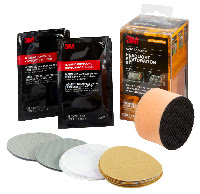
If you have an older vehicle and you've noticed that your headlights have a fogged look to the plastic, don't fret....I have a fix for you. Getting your headlights polished can cost you anywhere from $40-$100 at a shop, but with a kit from 3M you can do it for around $20.

I decided to get this kit and do it myself. I had plenty of volunteers with vehicles that had headlight problems. The vehicle I worked on was a 2002 VW. My concern was that the car belonged to a new driver and safety is number one with me.

One of the first things you'll notice after you use this kit is how you can make them clear again and the next is how much brighter your lights will shine the next time you drive at night. You can purchase this kit at most automotive stores or online. The kit comes with everything you need but a drill. They even have a new kit out that you can do by hand. It's a little more time consuming, but works just as well.

The directions are easy to follow and provides pictures at each step so that you know you're doing it right. I used my cordless drill and it worked just fine. It took me about an hour to do both lights my first time. The nice thing about it is if you don't get it right, you can do any part of the process again.

Here's a picture of the vehicle after I did the headlight on the left. It's hard to see because of the sun, but if you look you'll notice that you can see the inside of the headlight on the one I cleaned and you can't see it on the other. I would say to give it a try. You can even go online and watch a video about it as well.

Once you've cleaned the lights it best to keep them waxed so that this doesn't happen again. If it does, you know that in an hour you can clean them up again!

Wednesday, August 1, 2012

LSYE's Chicken Soup


When I was working at a dealership as a technician, for the most part, the other techs treated me like everyone else. They helped me and I helped them and there really wasn’t an issue about me being female in an all male environment.
           
The first conflict came about when a retired gentleman came in with a radio problem. Because the car’s mileage was below the first 3,000 mile service, it came to me. I checked the radio and found no problem with it. When the service advisor talked to the customer he asked to speak to the technician. I could tell by the look on his face that he was surprised when a woman came out to talk to him.

I explained how the radio worked and that it was working as it should. He told me that he was not satisfied with my answer and asked if he could speak to a male technician. I took him back out to the advisor and explained his request to speak with a male technician.

At that point, even though I was upset at being questioned, I went back to work and on with my day. About 20 minutes later I saw the owner of the vehicle motioning for me to come over to him. He seemed much more reserved and was having trouble looking me in the eye. I asked him what I could do for him and he told me that he had just come over to apologize to me. He said that not only did the male technician tell him the same thing that I did about his radio, but that the other technician asked him why he had questioned me, was it just because I was female?

The man felt a little sheepish and didn’t give an answer, but it was obvious, since he asked for a male technician, that he had questioned my ability to work on his vehicle. I told him that I was upset that he questioned me because I was a female, but that I appreciated the fact that he came over and admitted his mistake.

The interesting thing was that from that time on, whenever he came to the dealership for work, he would come over and see me and ask me about the technician working on his car. He always asked me to check on it and let me know what they found.

Even though we were from different generations, and had been raised with different ideals, we were able to find common ground. It’s important to admit when we’re wrong; it’s the only way we grow, as people and as a society.

Wednesday, July 25, 2012

Tire Pressure, Is It Really That Important?


We’ve all heard that proper tire inflation will help with gas mileage, but it’s also a safety concern. Improperly inflated tires can cause premature wear and stability issues as well. So first, let’s talk about were to find the proper tire pressure for your vehicle.

As you may know, tire manufacturers make tires that end up on a variety of vehicles. Therefore, you will never find the tire pressure for your vehicle on the tire itself. You need to look at the specifications for YOUR vehicle. You can find this information in your owner’s manual and somewhere on the vehicle, usually inside the driver’s door. Make sure you read it carefully; sometimes tire pressure is different in the front and the back. And don’t forget to check your spare tire at least once a year, a flat spare won’t help if you get a flat tire.
Digital Gauge

Stick Gauge
Dial Gauge
The next thing you need is a tire pressure gauge. I recommend that you purchase one and keep it in your vehicle. There are a variety of gauges, a stick gauge, dial gauge or a digital gauge. Find one that you feel comfortable with and know how to use it.


If you have a TPS sensor, don’t ignore it. Check the tire pressure. Remember, if you have nitrogen in your tires, it’s okay to add air if the tire is low.

Having a tire that is low on air may cause the car to feel unstable when driving it, or you may feel like it’s pulling to one side or the other. Obviously if all tires are properly inflated you’ll get the best ride down the road.

So what can happen if you don’t keep proper pressure in your tires. Well, there are a couple things. Over inflated tires will tend to wear prematurely down the center of the tire, while under inflated tires will wear along the outside edges.

It’s also important to rotate your tires so that you get even wear. Check your owner’s manual for the recommended schedule. If you don’t have this information, every 7500 miles is a good guideline to follow. Remember, your front wheels are doing all the steering, so you want the most tread in the front.

Tires are expensive these days. Proper maintenance will help you get your money’s worth and give you the longevity and mileage out of your tires as well.

Tuesday, July 17, 2012

Is That An Idiot Light On the Dash....Or Not?!

Every time you start your vehicle you see a bunch of lights that come on on the dash. Most of them go out after a few seconds, once the computers have done their initial scan of the systems, but what happens if a light stays on or a light comes on while you’re driving? Should you care, or are they just “idiot” lights?

I think that a lot of people like to ignore problems with their vehicle because they are either afraid they’ll get ripped off  if they take it to a shop, or they don’t want to think about how much it will cost to fix it. That being said, here are some lights that you SHOULD NOT ignore.

Red Oil Light: This light comes on when there is a problem with the oil pressure in the engine. Because the oil is like the blood of the vehicle, it’s important to keep it changed and full. If this light comes on while you are driving you should IMMEDIATELY pull over and turn the vehicle off. This light is the last warning before engine damage can happen, not the “you’ve got 50 miles before you need to get it looked at” light. If the oil is low, it’s possible that you could add oil and see if the light goes out. Most likely you’ll need a tow to a shop to see what the problem is.


Check Engine Light: This is a light that a lot of people ignore if the vehicle is driving okay. Unfortunately, this could make the problem worse and possibly cause an expensive repair down the line. The check engine light comes on when a sensor gives a bad reading. Sometimes the light can be on for something as simple as not tightening your gas cap, but other times it could be something more serious. There are many places now that will read this code for free. You can even purchase a code reader like the one from CarMD for about $100 to tell you the code. You can then look up this code to see what the possible problems are. You always want to make sure that you have a trained technician verify the problem before replacing parts.

Battery Light: The battery light comes on when there is a problem with the charging system of the vehicle. This could mean a problem with the battery, the alternator or the belt that drives it. Driving with the battery light on could cause the vehicle to just stop running. Many times a simple jump will not be the answer to fixing this problem so be aware they you may need to be towed to a shop for repairs. You should always have the battery and the alternator tested as one can cause damage to the other.


Coolant Light or Temperature Gauge: If this light comes on or the temperature gauge reads closer to the H than the C it means that you have an overheating problem. You should never let the gauge go into the red as this can cause engine damage. This is another light or indicator that tells you to pull the vehicle over and shut it off.  You should not drive the vehicle until it cools and coolant/antifreeze is added. Remember, you should never open the cap to add coolant/antifreeze while the engine is hot or you could suffer serious burns.


 These are just four of the lights you should watch and take action if they come on. Look in your owner's manual for more information and what other lights may indicate. Knowing when to stop driving before damaging your vehicle and preventing costly repairs will help you be an informed driver and keep you safe on the road. 

Remember, knowledge is power.....use it!


www.ladiesstartyourengines.com